| 周 | 课程单元 | 阅读资料 |
|---|---|---|
| 1 | 介绍及概要 Introduction and Overview | |
| 2 | 在制造中学习 Learning Through Making | 〈PIE网络:通过有趣的发明和发现用数码技术促进科学调查和工程学〉,由国家科学基金会提出,2000年。 "The PIE Network: Promoting Science Inquiry and Engineering through Playful Invention and Exploration with New Digital Technologies." Proposal to the National Science Foundation, 2000. Resnick, M., R. Berg和 M. Eisenberg. 〈黑盒子之外:把透明和美带回科学调查中〉,《学习科学杂志9》, 第1期,(2000):7-30。 Resnick, M., R. Berg, and M. Eisenberg. "Beyond Black Boxes: Bringing Transparency and Aesthetics Back to Scientific Investigation." Journal of the Learning Sciences 9, no. 1 (2000): 7-30. |
| 3 | 从别人身上学习 Learning from One Another | Gardner, H. 《非校园思维:孩子如何想和学校怎样教》,Basic Books,1989,第6,10,11章,第200-210页。 Gardner, H. The Unschooled Mind: How Children Think and How Schools Should Teach. Basic Books, 1989. Chapters 6, 10, 11, pp. 200-210. |
| 4 | 学徒式学习 Apprenticeship Learning | Brown,J. S., A. Collins和P. Duguid. 〈情境认识和文化学习〉,《教育研究者18》,第1期(1989):32-42。 Brown, J. S., A. Collins, and P. Duguid. "Situated Cognition and the Culture of Learning." Educational Researcher 18, no. 1 (1989): 32-42. |
| 5 | 有力的想法和表达的流畅度 Powerful Ideas and Fluency | Papert, S. 〈什么是大点子:对于点子力量的教育〉, 《IBM 系统杂志39》,第3-4期 (1991) Papert, S. "What's the Big Idea: Towards a Pedagogy of Idea Power." IBM Systems Journal 39, no. 3-4 (1991). |
| 6 | “独立” 学习 Learning "On Your Own" | 选读材料出自《在学校教育之外成长》的时事通讯。 Selected readings from the Growing Without Schooling newsletter. Holt, John.《任何时间都学习》。AddisonWesley 出版公司,1990年8月1日。ISBN:0201550911。 Holt, John. Learning All the Time. Addison Wesley Publishing Company, August 1, 1990. ISBN: 0201550911. |
| 7 | 选择你的工具(并熟练地使用工具) Choosing Your Tools (and Fluency with Tools) | Martin, F. 〈乐高设计的艺术〉,《机器人学实验者:机器人建造者杂志 1》, 第2 期(1995)。 Martin, F. "The Art of LEGO Design." The Robotics Practitioner: The Journal for Robot Builders 1, no. 2 (1995). Resnick, M., A. Bruckman和F. Martin. 〈钢琴不是立体声:创造会计算的工具箱〉,《Interactions 3》,第 6期 (1996): 64-71。 Resnick, M., A. Bruckman, and F. Martin. "Pianos Not Stereos: Creating Computational Construction Kits." Interactions 3, no. 6 (1996): 64-71. Martin,F.B.Mikhak和B.Silverman. 〈MetaCricket:用于制作计算装置的设计师工具箱〉,《IBM系统杂志39》, 第 3-4期 (2001)。 Martin, F., B. Mikhak, and B. Silverman. "MetaCricket: A Designer's Kit for Making Computational Devices." IBM Systems Journal 39, no. 3-4 (2001). |
| 8 | 纪录及评估活动 Documenting and Evaluating Activities | Duckworth, E. 〈拥有绝佳的点子〉,《哈佛教育评论42》, 第2 期(1972):第217-231页。 Duckworth, E. "The Having of Wonderful Ideas." Harvard Educational Review 42, no. 2 (1972): 217-231. 选读文章出自于Reggio Emilia学派的系列作品: Selected readings from a collection of books on the Reggio Emilia Approach: Katz,L. G.,和B. Cesarone编辑,《 Reggio Emilia方法的反思》,Redleaf出版社,1994。ISBN: 8886277687。 Katz, L. G., and B. Cesarone, eds. Reflections on the Reggio Emilia Approach. Redleaf Press, 1994. ISBN: 8886277687. Ceppi, G.和M. Zini,《 孩子,空间,关系:关于幼儿环境的新项目》,Reggio:Reggio S.R.L., 1998。 Ceppi, G., and M. Zini, eds. Children, Spaces, Relations: Metaproject for an Environment for Young Children. Reggio: Reggio S.R.L., 1998. 《泉水:孩子未被听到的声音》,Reggio: Reggio S.R.L.,1995。 The Fountains: The Unheard Voice of Children. Reggio: Reggio S.R.L., 1995. Edwards,Carolyn,George Forman及Lella Gandini,《孩子的上百种语言》, Ablex出版社,1997,ISBN: 156750311X。 Edwards, Carolyn, George Forman, and Lella Gandini, eds. The Hundred Languages of Children. Ablex Publishing, 1997. ISBN: 156750311X. |
| 9 | Diane Willow:学习 的空间、地点和环境 Diane Willow: Learning as Space, Place and Environment | Tuan,Yi-Fu. 〈Topophilia第九章〉,《环境理解,态度和价值研究》。纽约:哥伦比亚大学出版社,1990年11月1日。ISBN: 023107395X。 Tuan, Yi-Fu. Chapter 9 in Topophilia; A Study of Environmental Perception, Attitudes, and Values. New York: Columbia University Press, November 1, 1990. ISBN: 023107395X. Orr,David W. 《生态学叙事法第2章:教育和向后现代世界的过渡》。纽约:SUNY 出版社,1992年1月1日。ISBN:0791408744。 Orr, David W. Chapter 8 in Ecological Literacy: Education and the Transition to a Postmodern World. New York: SUNY Press, January 1, 1992. ISBN: 0791408744. Hiss,Tony. 《地点的经验第2章:一种新方法,考虑和安排我们正在发生根本变革的城市和乡村》。Vintage出版社,1991年10月1日。 ISBN:0679735941。 Hiss, Tony. Chapter 2 in The Experience of Place: A New Way of Looking at and Dealing With our Radically Changing Cities and Countryside. Vintage Press, October 1, 1991. ISBN: 0679735941. 在线阅读: Readings Online: Chawla,Louise.〈心醉神迷的地方〉儿童环境季刊,1990,7 (4):18-23。 Chawla, Louise. "Ecstatic Places." Children's Environments Quarterly, 1990, 7 (4): 18-23. Vecchi,Vea.〈在学校的什么地方能过得最好?〉,G. 和 M. Zini编辑,《孩子,空间,关系:关于幼儿环境的新项目》,Reggio:Reggio S.R.L.,1998。 Vecchi, Vea. "What kind of space for living well in school?" in Ceppi, G., and M. Zini, eds. Children, Spaces, Relations: Metaproject for an Environment for Young Children. Reggio: Reggio S.R.L., 1998. |
| 10 | 设计与工艺的对比 Design vs. Craft | |
| 11 | 讨论第一轮专题讨论会的计划 Discussion of Plans for First-round Workshops | |
| 12 | 第一及第二轮专题讨论会的报告 Reports on First and Second Round Workshops | |
| 13 | 给彼此的专题讨论会 Workshops for One Another | |
| 14 | 上交期末设计的报告,媒体实验室的专题讨论会 Final Project Reports Due, and Workshops for the Media Lab |
2008-01-12
从课程阅读材料看中美大学课程的差别。

2008-01-09
美国人的商务午餐
今天在Youtube上发现一部华尔街日报的视频,介绍的是美国人的商务午餐,从这个吃午餐的习惯上我们可以了解到中美文化的差异以及美国人商务交流的倾向。
美国人的这种商务午餐被称作Power Lunch, 也就是所谓的“实力午餐”,每个行业里有头有脸的人物每天固定到有数的几家餐馆用餐。共餐对象不仅有生意上的伙伴,也有竞争对手。他们边吃边谈,同时密切关注还有谁在那里用餐,和谁在一起。吃什么并不重要,餐桌上的话题和餐桌上的人才是最重要的。
在纽约,几乎每个行业都有自己的实力餐据点。四季酒店优雅的烧烤屋(The Grill Room)是华尔街和实业界巨头锺爱的午餐场所;政界人物一般喜欢在Lowes Regency酒店与商界人士共进早餐;而纽约著名的牛排店则是实力晚餐的首选场合,这也是为什么这些店虽然价格不菲却总要提前几周甚至几个月预定才能有座的原因。
之所以称作Power,是因为这些餐桌上的话题通常都有相当大的份量,动辙就是几亿、几十亿美元的并购交易。对于很多中国人而言,这或许有点匪夷所思,因为我们喜欢关着门讨论问题,不论是国事还是家事。但是在美国,很多重要的生意都是在这些公开的餐桌上谈成的。2003年底华纳唱片公司易手就是买家和卖家在曼哈顿的四季酒店共进午餐时敲定的。据说当时买方和卖方两人低头谈了很久,就连周围就餐的几位商界巨头--包括露华浓公司(Revlon Inc.)老板、亿万富翁Ronald Perelman和雅诗兰黛(Estee Lauder)家族继承人Ronald S. Lauder--也不时朝他们的餐桌瞥上一眼。几天后就传来了华纳被卖的消息。此外,历史上最大的并购案、价值1,010亿美元的荷兰银行(ABN Amro)三方分拆草案也是去年年初三家收购方总裁和美林的一位投资银行家在日内瓦四季酒店一边喝着葡萄酒一边在午餐桌上拟就的。
此外,这类餐厅的食物都价格不菲,不过,就餐的客人们并不在乎这个,他们最在意的可能是他们坐哪张桌子。这类餐厅里的每张桌子暗中都有级别。就迈克尔来说,近门而又靠墙的桌子是最好的,因为那里最利于看人和被人看。有名的人一般都坐那里,认识的人进来时都得跟你打招呼,同时因为靠墙,它还带有一点私密性。
美国人的这种商务午餐被称作Power Lunch, 也就是所谓的“实力午餐”,每个行业里有头有脸的人物每天固定到有数的几家餐馆用餐。共餐对象不仅有生意上的伙伴,也有竞争对手。他们边吃边谈,同时密切关注还有谁在那里用餐,和谁在一起。吃什么并不重要,餐桌上的话题和餐桌上的人才是最重要的。
在纽约,几乎每个行业都有自己的实力餐据点。四季酒店优雅的烧烤屋(The Grill Room)是华尔街和实业界巨头锺爱的午餐场所;政界人物一般喜欢在Lowes Regency酒店与商界人士共进早餐;而纽约著名的牛排店则是实力晚餐的首选场合,这也是为什么这些店虽然价格不菲却总要提前几周甚至几个月预定才能有座的原因。
之所以称作Power,是因为这些餐桌上的话题通常都有相当大的份量,动辙就是几亿、几十亿美元的并购交易。对于很多中国人而言,这或许有点匪夷所思,因为我们喜欢关着门讨论问题,不论是国事还是家事。但是在美国,很多重要的生意都是在这些公开的餐桌上谈成的。2003年底华纳唱片公司易手就是买家和卖家在曼哈顿的四季酒店共进午餐时敲定的。据说当时买方和卖方两人低头谈了很久,就连周围就餐的几位商界巨头--包括露华浓公司(Revlon Inc.)老板、亿万富翁Ronald Perelman和雅诗兰黛(Estee Lauder)家族继承人Ronald S. Lauder--也不时朝他们的餐桌瞥上一眼。几天后就传来了华纳被卖的消息。此外,历史上最大的并购案、价值1,010亿美元的荷兰银行(ABN Amro)三方分拆草案也是去年年初三家收购方总裁和美林的一位投资银行家在日内瓦四季酒店一边喝着葡萄酒一边在午餐桌上拟就的。
此外,这类餐厅的食物都价格不菲,不过,就餐的客人们并不在乎这个,他们最在意的可能是他们坐哪张桌子。这类餐厅里的每张桌子暗中都有级别。就迈克尔来说,近门而又靠墙的桌子是最好的,因为那里最利于看人和被人看。有名的人一般都坐那里,认识的人进来时都得跟你打招呼,同时因为靠墙,它还带有一点私密性。
Power Lunch at Michael's
2008-01-08
在Blogger blogspot中帖代码的一种方法
参考:http://klcintw4.blogspot.com/2006/11/blog-post_03.html
在css中加入如下代码CODE {
display: block; /* fixes a strange ie margin bug */
font-family: Courier New;
font-size: 8pt;
overflow:auto;
background: #f0f0f0 url(http://klcintw.images.googlepages.com/Code_BG.gif) left top repeat-y;
border: 1px solid #ccc;
padding: 10px 10px 10px 21px;
max-height:200px;
line-height: 1.2em;
}
在文章中将要粘贴的代码贴入 <code> </code>中
效果.comment-body-author {
margin:0;
padding:0 0 0 20px;
background-color:#C0C0C0;
}
注意: "<"和">"要用 "&lt;"和" &gt;"替换
The First Chapter :Some basic knowledge of Programming
首先,介绍部分C++的预定义字:
C++ defines the following reserved words: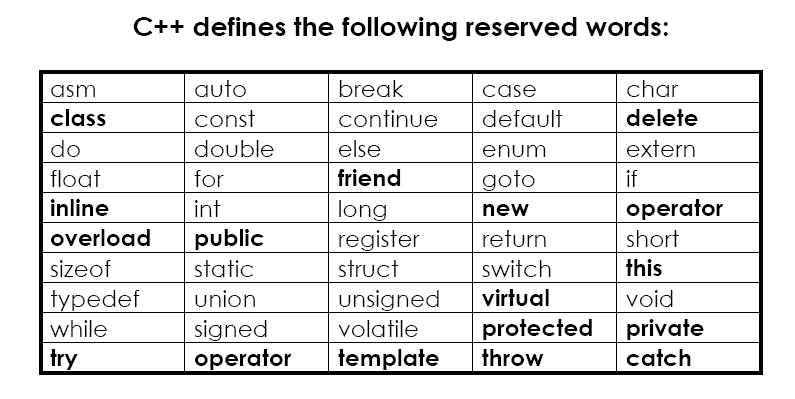

此外,C++也能识别C类型的注释:“ /* ……*/
在C++中,它自身定义的注释为“//……”
-------------------------------------------------------------
定义:
identifier(标识符)是一个用户自定义的名称,比如变量名。标识符不可以与以上reserved words同名。
C string literal(C字符串直接量)是表示可变数量字符的文字值,用""括起来,如"This is a Hello world test."
block(块)是与语句有同样作用的代码块。
数据类型:
C++规定了三种基本的数据类型:
- 整型(integer):用来表示整数值分别有short,int,long.在32位CPU的计算机上long和int长度相同.
- 浮点(float):用来表示小数值,有float,double,long double.
- 字符(character):用来存储字符.
具体信息如下:
char :字符类型
int : 整型
float :单精度实型(浮点型)
double : 双精度实型
unsigned : 无符号类型
signed : 有符号类型
bool : 布尔类型
true : 布尔类型的真值
false : 布尔类型的假值
void : 无类型
sizeof : 取得指定类型的所占用的范围
typedef : 为某种类型取一别名
--------------------------------
类型标识 类型说明 长度 (字节) 范围 备注
char 字符型 1 -128 ~ 127 -27 ~ (27 -1)
unsigned char 无符字符型 1 0 ~ 255 0 ~ (28 -1)
short int 短整型 2 -32768 ~ 32767 -215 ~ (215 - 1)
unsigned short int 无符短整型 2 0 ~ 65535 0 ~ (216 - 1)
int 整型 4 -2147483648 ~ 2147483647 -231 ~ (231 - 1)
unsigned int 无符整型 4 0 ~ 4294967295 0 ~ (232-1)
float 实型(单精度) 4 -1.18*1038 ~ 3.40*1038 7位有效位
double 实型(双精度) 8 -2.23*10308 ~ 1.79*108308 15位有效位
long double 实型(长双精度) 10 -3.37*104932 ~ 1.18*104932 19位有效位
---------------------------------------
注:
unsigned 用于修饰 int 和 char 类型。它使int 或 char 类型成为无符号类型。
signed 是 unsigned 反义词,如 signed int 表示有符号类型,不过signed可以省略,所以上面列出char,short int,int 都是有符号类型。
由于32位计算机下long int 同int同样是4个字节,所以一般省略直接写int。
布尔型(bool)和无类型(void)
除字符型,整型,实型以外,布尔型和无类型也是较常用的两种数据类型。
布尔型(bool)
布尔类型是C++的内容,C语言没有这一类型。
布尔类型的数据只有两种值:true(真) 数值为非0或 false(假)数值为0。
无类型(void)
这个类型比较怪“无”类型。是的,没有类型的类型。或者我们这样认为比较好接受:在不需要明确指定类型的时候,我们可能使用 void 来表示。
为了容易表示,我们用下面这段代码来演示这几种数据类型:
#include<iostream>
#include <limits>
using namespace std;

int main()
{
short SHORT;
unsigned short USGSHORT;
int INT;
unsigned int USGINT;
float FLOAT;
double DOUBLE;
long double LONGDOUBLE;

cout << "\n类型\t\t\t字节数(bytes)\t精度\t最大值\t\t最小值";
cout << "\nshort\t\t\t" << sizeof(SHORT);
cout<<"\t\t"<<numeric_limits<short>::digits10;
cout<<"\t"<<numeric_limits<short>::max();
cout<<"\t\t"<<numeric_limits<short>::min();
cout << "\nunsigned short\t\t" << sizeof(USGSHORT);
cout<<"\t\t"<<numeric_limits<unsigned short>::digits10;
cout<<"\t"<<numeric_limits<unsigned short>::max();
cout<<"\t\t"<<numeric_limits<unsigned short>::min();
cout << "\nint\t\t\t" << sizeof(INT);
cout<<"\t\t"<<numeric_limits<int>::digits10;
cout<<"\t"<<numeric_limits<int>::max();
cout<<"\t"<<numeric_limits<int>::min();
cout << "\nunsigned int\t\t" << sizeof(USGINT);
cout<<"\t\t"<<numeric_limits<unsigned int>::digits10;
cout<<"\t"<<numeric_limits<unsigned int>::max();
cout<<"\t"<<numeric_limits<unsigned int>::min();
cout << "\nfloat\t\t\t" << sizeof(FLOAT);
cout<<"\t\t"<<numeric_limits<float>::digits10;
cout<<"\t"<<numeric_limits<float>::max();
cout<<"\t"<<numeric_limits<float>::min();
cout << "\ndouble\t\t\t" << sizeof(DOUBLE);
cout<<"\t\t"<<numeric_limits<double>::digits10;
cout<<"\t"<<numeric_limits<double>::max();
cout<<"\t"<<numeric_limits<double>::min();
cout << "\nlong double\t\t" << sizeof(LONGDOUBLE);
cout<<"\t\t"<<numeric_limits<long double>::digits10;
cout<<"\t"<<numeric_limits<long double>::max();
cout<<"\t"<<numeric_limits<long double>::min();
cout <<endl;
return 0;}
其中\t等价与你在VC里面按TAB键的效果
numeric_limits<double>::digits10; 是返回该类型精度的。
用法:
sizeof(数据类型)
sizeof(变量)
可以返回数据类型占用的字节数。
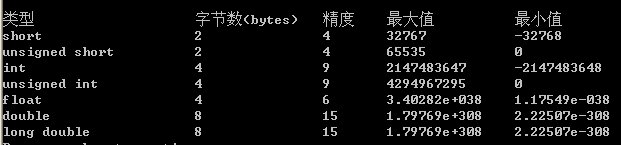
运行结果如下:

prologue——序章
我是一个业余学习人员,也就是说,编程与计算机科学不是我的本行也不是我学习的专业,但是我的自我规划中安排了学习C或者C++这一项,于是开始学习,实际上,我几个月前就开始学习C++,很明显,由于没有做过任何学习笔记导致现在整体编写能力还是十分不令人满意,所以现在我开始从头做过笔记,也重新学习一遍。
这里我无意介绍C++的历史,有兴趣的话google it。
首先,从C++的定位开始:
在Bjarne Stroustrup的一个网页上介绍了这些:
The C++ Programming Language
C++ is a general purpose programming language with a bias towards systems programming that
- is a better C
- supports data abstraction
- supports object-oriented programming
- supports generic programming.
另外,还有一些必要的介绍:
C++ supports
+ Classes, instances, and methods
+ Polymorphism, encapsulation, and inheritance
C++ does not support
- Automatic garbage collection
- dynamic creation of classes
The main forte of C++ is code reuse and encapsulation. Since most modern programming enterprises involve thousands of lines of code, these features have given C++ its popularity, and, to many, the language constitutes the last "... piece of wood to hang in the middle of the ocean ..."
The following points will be covered for C++:
• Programming Style in C++ (differences between C and C++)
• C++ enhancements over C.
• References and their relation to pointers
• Classes
• Memory Allocation
• More features of classes (static members, friends, arrays of instances, new and delete operators)
• Inheritance, polymorphism, virtual functions
• Operator overloading
• Templates
• Run Time Exception Handling
订阅:
博文 (Atom)

